
Get to know me a bit more
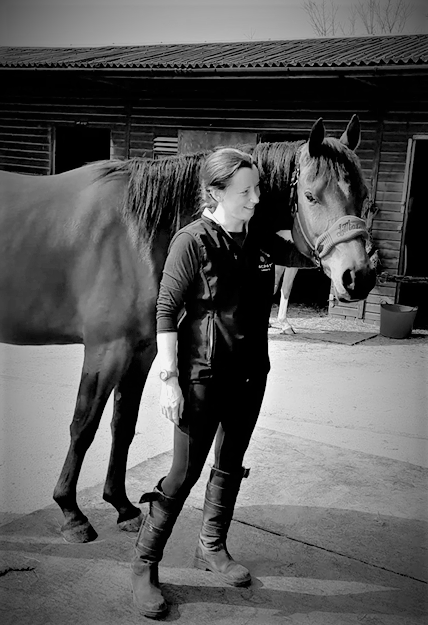
I didn't grow up with a horsey background. But my primary school years were spent cantering an imaginary pony around the playground, doing jump position over speedbumps in the car, and reading the entire collection of Saddle Club, Jinny books and H&P magazines.
By age 10, I had convinced my mum to let me volunteer at the local riding school, where weekly lessons turned into a lifestyle spending every weekend at the yard for the next 12 years.
Having researched careers, I chose my GCSEs to lead onto the correct A-levels to get into the 2 degrees required for Veterinary Physiotherapy.
It took a hell of a lot of dedication to go through the human Physiotherapy route, but that was the only way of becoming Chartered and the Gold Standard for animal treatment.
So I dedicated my entire academic life to working towards the goal, eventually achieving a BSc(Hons) degree in Physiotherapy in 2010.
Since qualifying, I realised how invaluable the experience treating humans in the NHS is, to provide the best possible background knowledge and skills for animal treatment. So I spent some years rotating between Musculoskeletal outpatients, Neurological rehabilitation, Hand therapy (mainly tendon injuries & repairs), Burns and Plastic surgery, before specialising in Musculoskeletal as a senior Specialist Physiotherapist.
I then completed the 2-year Masters-level post-graduate Diploma in Veterinary Physiotherapy, at the University of Liverpool vet school.
Now having been an ACPAT Chartered Physiotherapist for a decade, I can say I truly love my 'job'! It's not just a job, it's who I AM.
I've also developed my practice and gained enough experience with all different types, to realise my niche.
The people & horses that I'm really here to help.
Outside of work, I have 2 beautiful little girls, 2 cats and 1 husband. I love to dance, used to do ballet & tap, of which ballet I've re-started and loved in adult years. Plus some belly-dancing, Salsa, and attempted street dance but we won't talk about that! (I'm just not cool enough to pull it off!)
I have a big passion for wildlife and conservation, especially Marine mammals and Big Cats. I've stroked a cheetah, photographed Blue & Humpback Whales, and proudly display canvases of a wild leopard & Indian elephants on the walls at home.
The meaning of Chartered
The term Physiotherapist is a protected title, whereby only those with a degree in Physiotherapy (i.e. human) may use it. However, any word preceding it invalidates this, therefore ‘Veterinary or Animal or Equine Physiotherapist’ does not require any specific qualifications or regulation. There are copious training routes now available to gain a qualification in veterinary physiotherapy, which vary considerably in their length and requirements. The only way to be sure you are using a qualified Physiotherapist is to look for the title ‘Chartered’. A Chartered Physiotherapist has gone through the rigorous training routes of a human Physiotherapy degree, experience usually in the NHS, then a Masters-level post-graduate degree in Veterinary Physiotherapy. They are then eligible to be members of the Association of Chartered Physiotherapists in Animal Therapy (ACPAT).
What actually is Physiotherapy?
Physiotherapy is a vital part of the NHS because it is a science-based health profession (not a complementary therapy), using physical methods to improve the body's function. A qualified Physiotherapist has undergone a 3-year full-time degree, gaining knowledge in anatomy, physiology, neurology, biomechanics and pathophysiology. Core skills are then developed on clinical rotations in hospitals, including Orthopaedics, Musculoskeletal, Neurology, Respiratory, Community Rehabilitation, and many others, before specialising in their preferred area.
The Chartered Society of Physiotherapy (CSP) is a professional body for those that have successfully completed this standardised training and exams.
Human regulation
The most important skill of Physiotherapists is clinical reasoning; choosing the most appropriate management option supported by evidence. Physiotherapists’ skills are continuously developed throughout their career, usually in the NHS, which provides regular in-service training, peer supervision, watched assessments and case reviews. This scrutiny ensures safe practice, effectiveness and up-to-date knowledge of evidence.
All Physiotherapists are regulated by the Health and Care Professions Council (HCPC).
Veterinary Physiotherapy
The application of all the physiotherapeutic skills can be applied to Horses, Dogs and other animals. Veterinary physiotherapy incorporates knowledge of veterinary practices, animal anatomy, physiology, biomechanics and pathophysiology. It also uses ‘evidence-based medicine’, where the most appropriate and effective methods are used to treat an animal.
There is now a register for animal therapists (animal physiotherapists, osteopaths & chiropractors) who have shown compliance with a Professional Code of Conduct, Standards of Practice and requirements for Continuing Professional Development. RAMP allows owners, Veterinarians and insurance companies to ensure they are using a highly qualified individual that is insured for their practice.